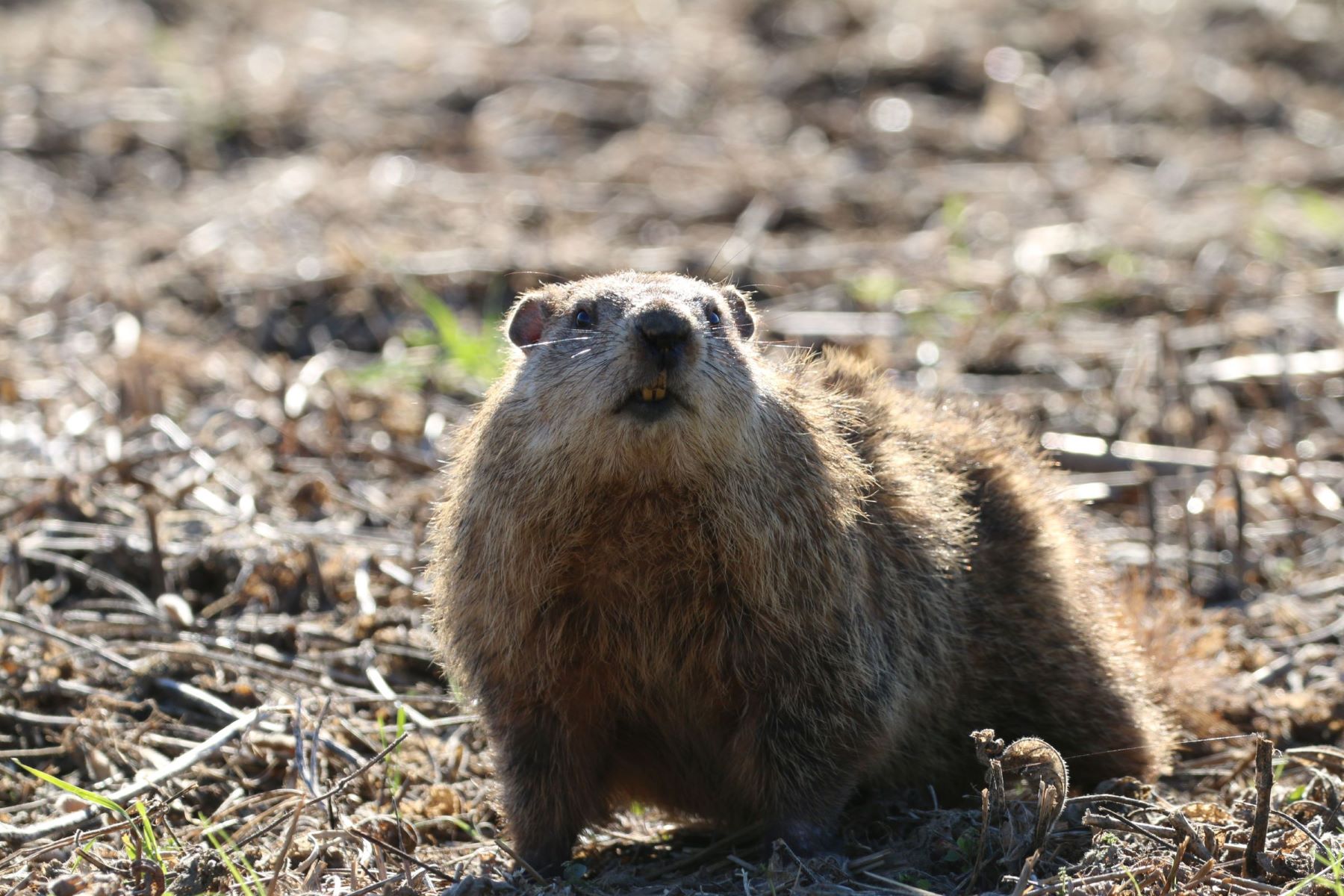
The Groundhog (Marmota monax), also commonly called Woodchuck or Whistle pig, is a large rodent that lives along forest edges and agriculture fields. These critters are powerful excavators as they dig burrows and tunnels underground to live in and hibernate during the cold, winter months. Sometimes their burrows are as deep as 5 feet down and can include up to 45 feet of tunnel segments. These burrows typically have 2 – 5 entrances to help them escape from predators.
Groundhogs are ecologically important as they are a prey and scavenger food source for foxes, coyotes, birds of prey, etc. As they dig their burrows, they mix and aerate the soil, which results in cycling nutrients in the ground. In addition, their abandoned burrows are often utilized by other species of wildlife to take refuge or create their own dens to raise young.
Facts
Description and Behavior
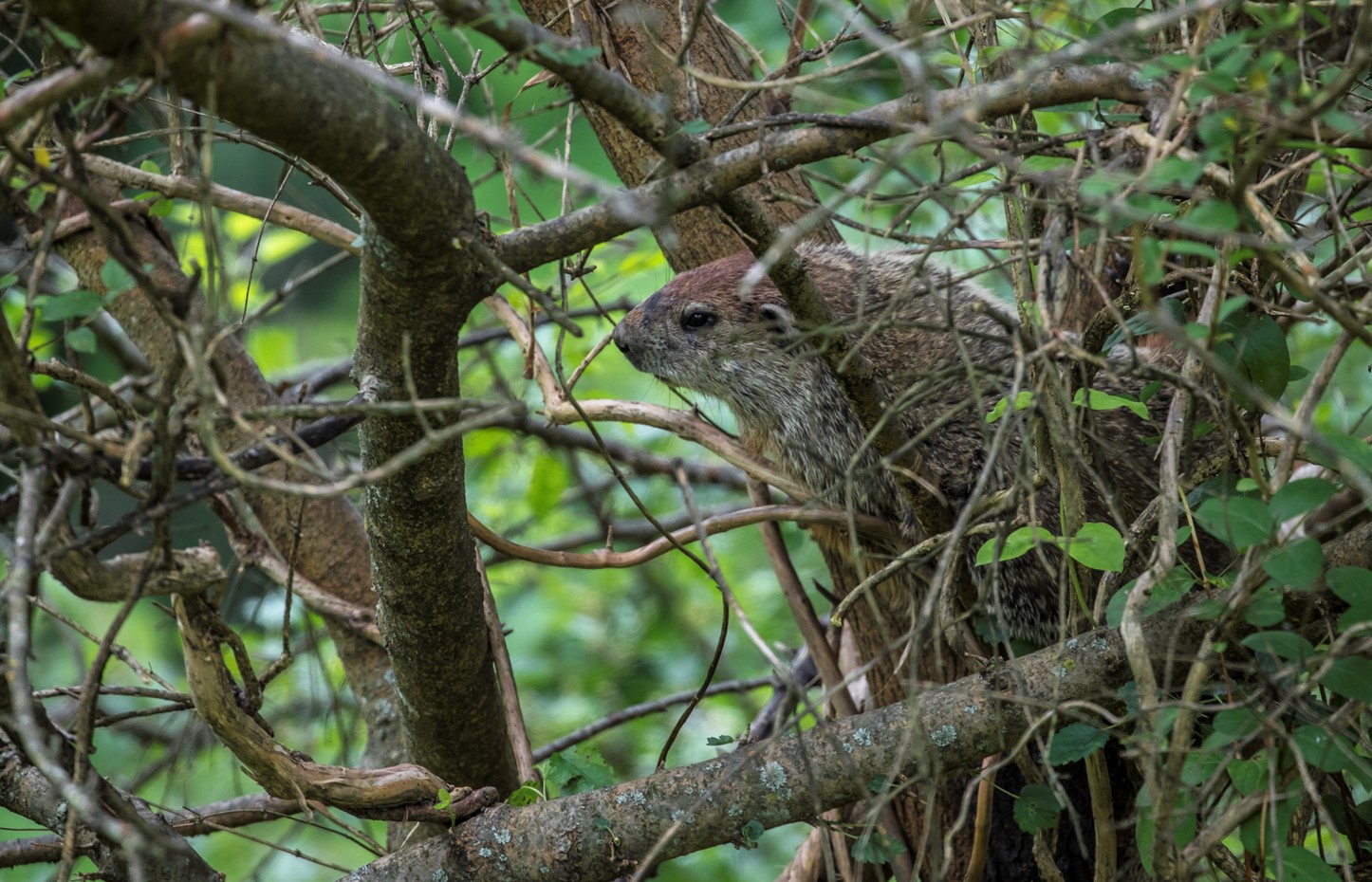
Adult groundhogs weigh up to 14 pounds and grow to at least 2 ft. in length. They have grayish brown fur, a short, bushy tail and short, powerful legs with dark brown feet that are equipped with heavy claws, specialized for digging. Perhaps a little-known fact, groundhogs also have the ability to climb trees to escape predators and forage for food!
Beginning late October or early November, groundhogs begin to hibernate. During hibernation, their heartbeat slows down to 4 or 5 beats per minute (bpm) from their typical 80 bpm. This helps their body stay in a dormant state. In addition, their body temperature drops from 98 degrees to as little as 38 degrees. Groundhogs typically emerge from their burrows in late February through early March. Though they hibernate, during rare winter days when temperatures rise, groundhogs may wake up and leave their burrow briefly, only to return when the temperature drops again the same day.
Diet
Groundhogs are herbivores (diet consists mainly of plant materials) and can often be observed grazing on grass, leaves, flowers, clover and grains. Occasionally, they raid gardens or agricultural fields for fruits and vegetables, an often-unwelcomed occurrence! Though plant focused, groundhogs will also eat insects from time to time.
Reproduction
Groundhogs generally begin to breed when they reach 2 years of age. Early March through April, Groundhogs mate and once impregnated, it takes up to 32 days for the young to develop. Male mates stay in the den with the female until just before the young are born. Litters usually consist of 2 – 6 blind, hairless and helpless young which take 5 – 6 weeks to wean.
Issues and Mitigating/Preventing Impacts
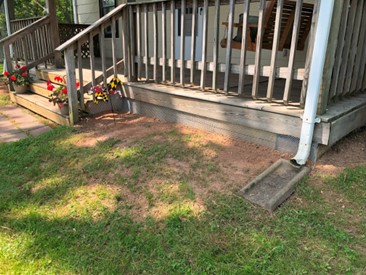
Groundhogs’ dietary habits and digging activity often cause damage to backyard plantings, vegetable gardens, building foundations, pond dams, and stormwater management facilities. In addition, horse safety is a concern within their stables and pastures when groundhogs dig holes in those areas.
Installation of exclusionary features in areas where groundhogs are not acceptable is the best way to prevent issues. Fencing can be installed around gardens to protect produce and other landscape plantings. To prevent issues surrounding buildings and other structures, sturdy hardware cloth installed around the foundation, and using a horizontal/apron method is also effective. Exclusionary measures installed in these settings prevents groundhogs from successfully digging burrows under buildings or features where they cannot be tolerated.
As a last resort, a “Maryland Wildlife Damage Control Operator Permit” holder may be able to provide further guidance and assistance, especially if removal of the animal becomes necessary or preferred.
NOTE: Individuals that are experiencing problems with groundhogs or other wildlife species are encouraged to call the toll-free Maryland Wildlife Information line at 877-463-6497 for guidance.
More Information
- M-NCPPC Montgomery Parks Natural Resources Management Section Information about groundhogs on Park property: 301-962-1341
- USDA-APHIS Maryland Wildlife Information line for guidance with issues/concerns about groundhogs or other wildlife species on private property: 877-463-6497
- Maryland Department of Natural Resources, Wildlife & Heritage (DNR): 301-258-7308
Resources Cited
- MD Department of Natural Resources Wildlife & Heritage Service – Maryland Mammals: Groundhog
- University of MD Extension – Groundhogs
- Frontline Animal Removal – Keeping Wildlife from Getting Under Decks, Porches, and Foundations