Discover Our Trails Features, Maps, and Tips for Your Journey
Oakley Cabin is a 19th century African American historic site. Built as one of three slave dwellings in the 1820s, the cabin was the center of an African American roadside community from emancipation well into the 20th century. The dwelling, inhabited until 1976, is now operates as a living history museum.
Unless noted otherwise on the map, trails marked “Natural Surface” and “Hard Surface” are “Shared by All” trails which includes hikers, bikers, and equestrians.
History: Newlin’s Mill
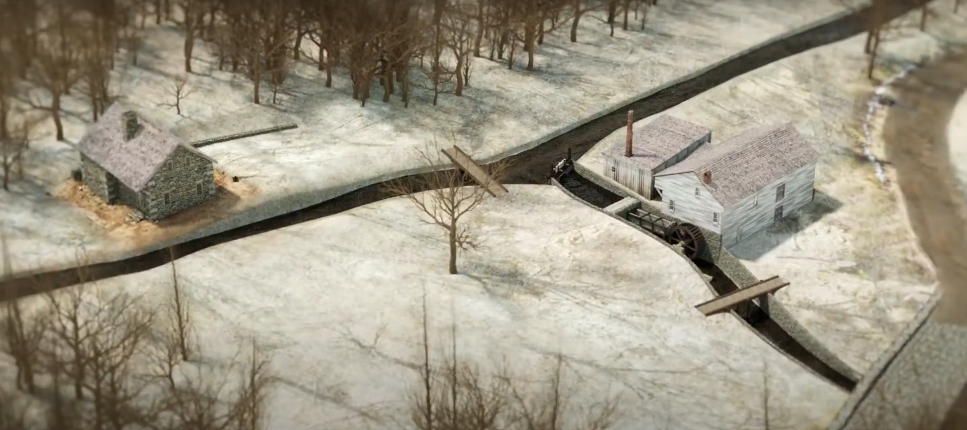
In 1810, David Newlin operated an oil mill along Reddy Branch. The mill ground flax seed into linseed oil, which was used in paint, wood varnish, lighting, and as a machinery lubricant. A covenant prevented Newlin from grinding grain and competing with Richard Thomas’ mill on the east side of Brookeville.
Digital reconstruction of Newlin’s Mill by Maryland Department of Transportation’s State Highway Administration in collaboration with Montgomery Parks and the Town of Brookville, 2017
Succeeding his father, Artemus Newlin also offered apprenticeships to orphans. In 1845 Joseph Clements, a free African American teenager became legally bound to work at the mill for seven years. He and his younger sister Caroline lived with the Newlin family when the census was taken in 1850. The mill remained in the Newlin family until 1874. Operations ended in 1912, and by 1923 the building was removed.
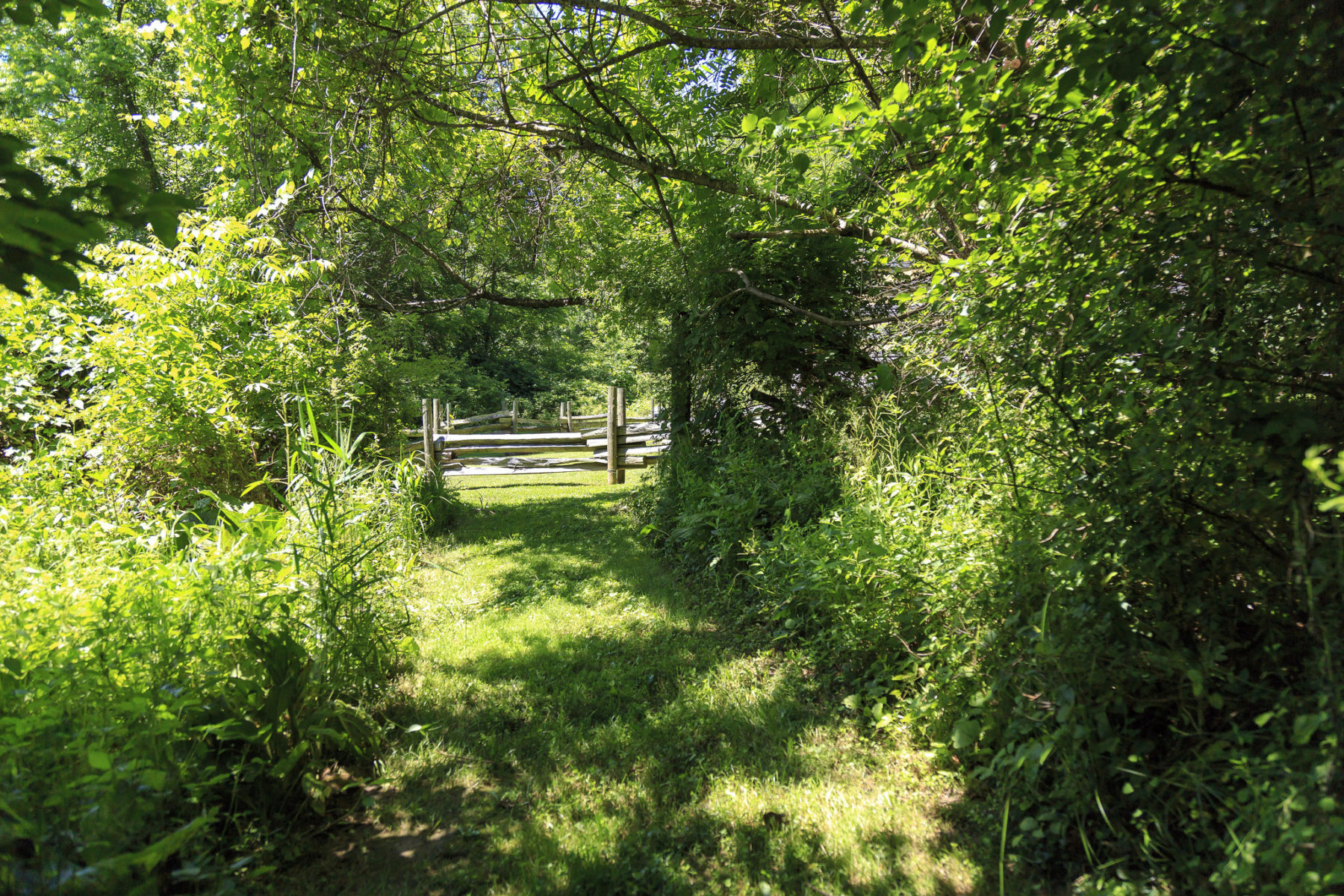
Visitors can follow a trail from Oakley Cabin to the archaeological site of the mill itself. The trail follows and is partially within the head race, the ditch that once directed flowing water to power the mill. The stone foundation of the mill worker’s dwelling can also still be seen nearby.